

Start with the box itself
Creating a project asks you three questions, and all three matter more than they look.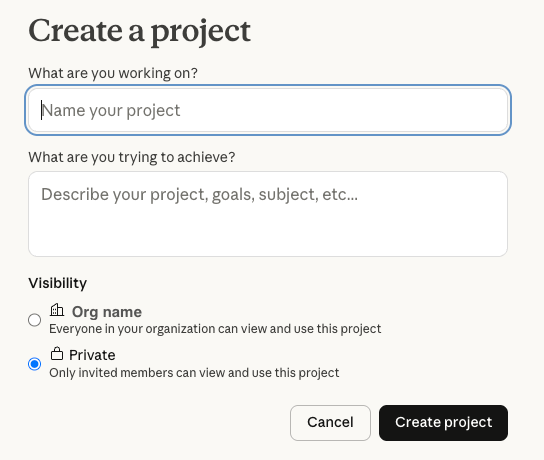
The create dialog. On Team and Enterprise plans the visibility choice appears here: private until invited, or open to everyone in your organization.
Instructions are behavior, knowledge is reference
Everything you might give a project falls on one side of a single line. If it changes how Claude should act, it belongs in instructions. If it is something Claude should look things up in, it belongs in knowledge. Instructions are read as standing orders in every chat. Knowledge is the library on the shelf behind the desk. Good instructions read like a briefing to a capable new hire, not a wish list: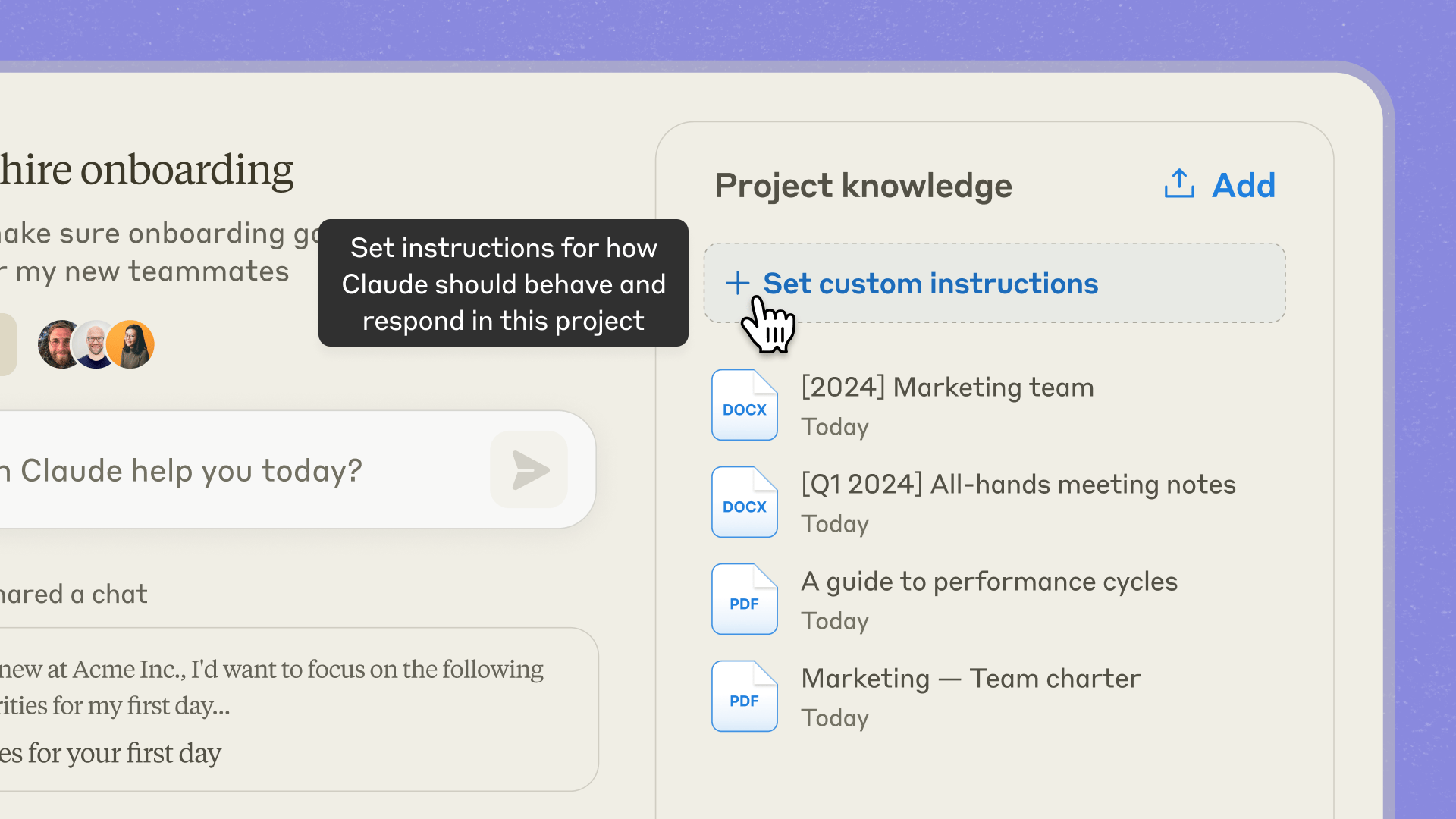
Set custom instructions sits at the top of the project knowledge panel. One text box, applied to every chat in the workspace.
Pack the knowledge base
Nine things are sitting next to your keyboard, and all nine feel like they might belong in the new project. They do not. Sort each one into instructions, knowledge, or the leave-out pile, and keep an eye on the capacity gauge while you work. Something interesting happens when you load the heavy crate.What the gauge was doing
Below the line, project knowledge is loaded in full into every single chat. Precise, but heavy: every file you add rides along with every message, relevant or not. Past the line, Claude flips the project into retrieval mode, sometimes called RAG. Instead of carrying everything, it searches your files and pulls in only the passages a question needs. The switch is automatic, a small indicator appears on the project, and capacity stretches up to ten times the normal limit. If you later trim the knowledge back under the line, the project returns to carrying everything in full. Retrieval is why the 900 page manual is allowed in. It is also why the email archive stays out. A retrieval system has to find the right passage among everything you gave it, and every irrelevant file competes with the one that matters. A focused five file project beats a fifty file dumping ground on every question that counts.The one file that compounds
Add a file to knowledge calleddecisions.md, and end important chats by asking Claude to draft the lines it earned:
The ten minutes, as a checklist
- Name the project after the work. Write a two sentence description of the goal.
- Choose visibility deliberately. Private is the default for a reason.
- Write instructions as behavior: voice, audience, rules, and what wins when sources conflict.
- Add the three to five reference files the work actually leans on.
- Create
decisions.mdwith whatever is already settled. - Run one real task and fix whatever the answer got wrong, in the instructions, not in the chat.
Product reference: Retrieval augmented generation for projects in the official Claude Help Center.
Artifacts
The project is packed. Now meet the other half of this section: the panel where Claude’s answers become documents, diagrams, and working apps.